Intent Model Management
In this project, I addressed the bottleneck challenge of the Conversational AI pipeline by designing a self-serve platform for intent model management. This solution empowered clients to independently train, test, and deploy conversational AI models, streamlining a process previously managed by internal teams.
P.S: This feature did not use LLMs
Impact
-
Industry Recognition
Sprinklr was positioned as a Challenger in Gartner's 2023 Magic Quadrant for Enterprise Conversational AI Platforms, with flexible GUI and sophisticated capabilities highlighted as key strengths. -
Feature Adoption
The Intent Model Management and Testing feature, part of a broader suite of Conversational AI projects I worked on, has been adopted by 13 Sprinklr clients since its release.
Conversational bots are 24/7 assistants
Conversational AI bots are digital assistants that use natural language processing to interact with users via text or voice. They're built to handle routine questions and tasks around the clock, typically used for customer service to provide fast support. When needed, they escalate complex issues to human agents.
Intent models are the interpreters between bots and customers
Intent models are the bot's brain, decoding what customers really want - their "intent." These models help bots understand queries and respond correctly, or route complex issues to human agents. Without good intent models, bots might misunderstand customers and provide unhelpful responses.
Problem: Brands are dependent on Sprinklr's internal teams to manage their intent models costing them time and money
The process of managing intent models depended on Sprinklr's teams using Slack plugins and Excel spreadsheets to handle updates for each brand. This inefficient approach consumed excessive time from Sprinklr's teams, diverting resources from product improvements. Meanwhile, brands faced delays in modifying their bots. The system hindered scalability and limited client autonomy in managing their intent models.
Solution: Create a self-serve feature for brands to manage and deploy intent models independently
Design goals
-
Easy to learn for non‑technical users
I learnt that not all customers (retail brands) were going to have the ability to have dedicated people/teams to manage these intent models. So our tool had to be easy enough for someone like a product manager persona to pick up and use confidently. -
Enable confident deployment
We also wanted brands to be confident in deploying these intent models, so it was important that users understood the data clearly to confidently know when a model was ready for deployment.
Simplifying the information architecture
The initial architecture from the PRD was complex and fragmented the information. After initial design iterations, I worked with the product and development teams to simplify this and bring it closer to the user's mental model.
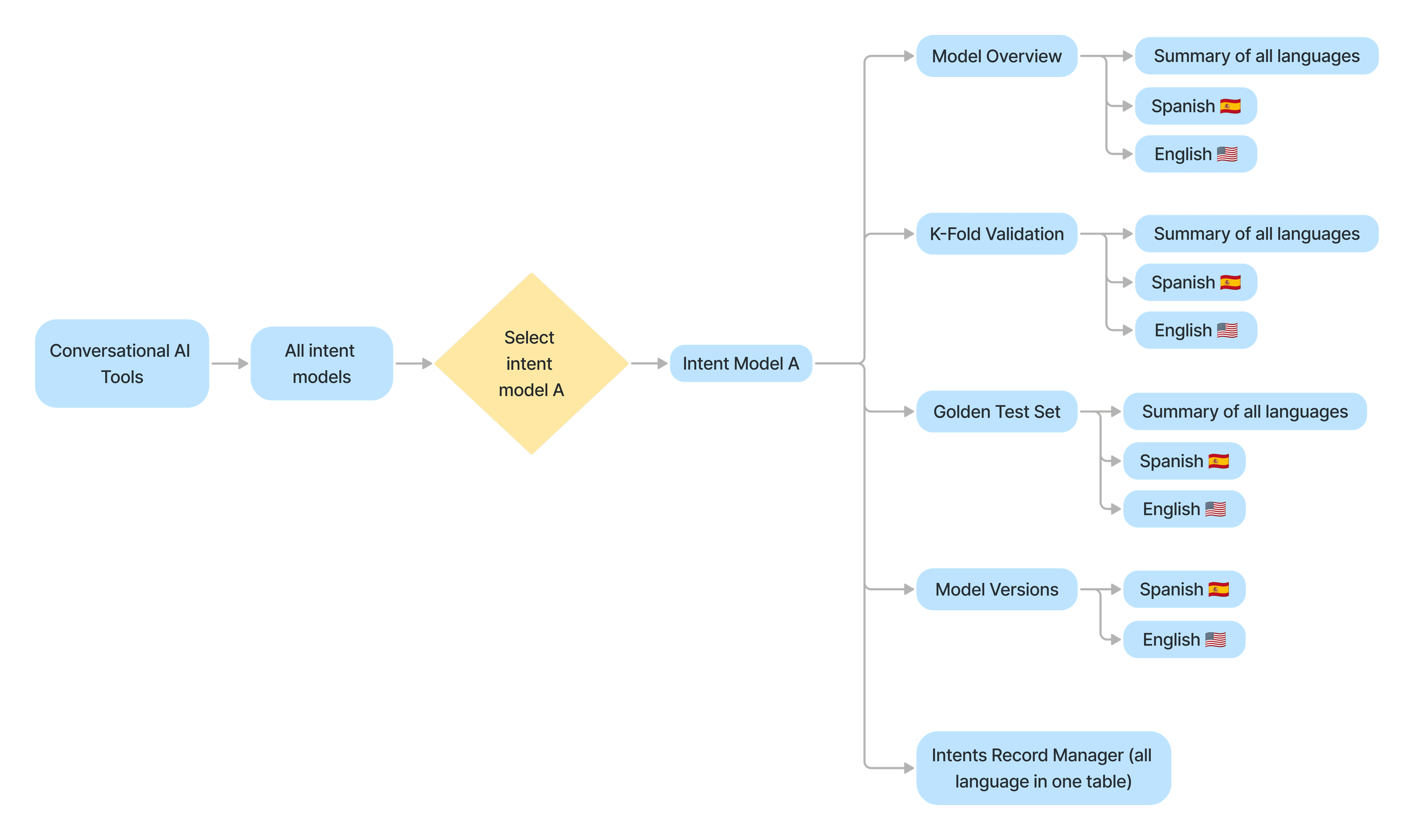
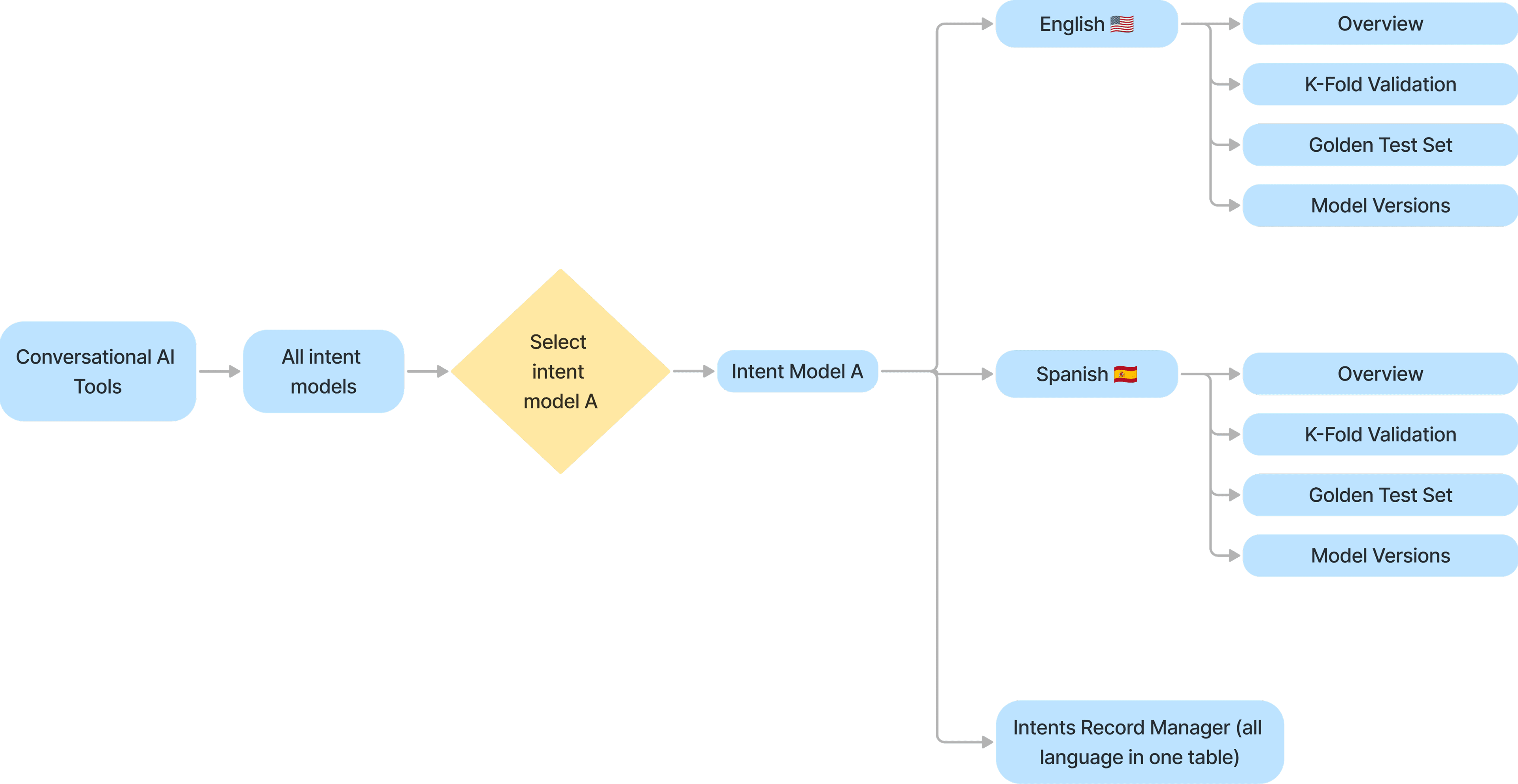
Overview card for an intent model
Version card for an intent model
Main flow
Takeaways
-
Digging Deeper Pays Off — I learned that going beyond the PRD to really understand the product and its context was crucial. This deeper dive helped me create a design that truly met user needs.
-
Documentation Enhances Collaboration — I consistently documented my learnings, Q&A sessions, and decisions made along the way. This written documentation kept stakeholders aligned and reduced back-and-forth communication, accelerating the design process.
-
Be Flexible and Persuasive — When I realized our initial approach wasn't working, I took the initiative to advocate for a change in direction. Despite our tight timeline, I persuaded the team that investing extra time in rethinking our design was crucial. This ultimately led to a more intuitive and effective solution for users.